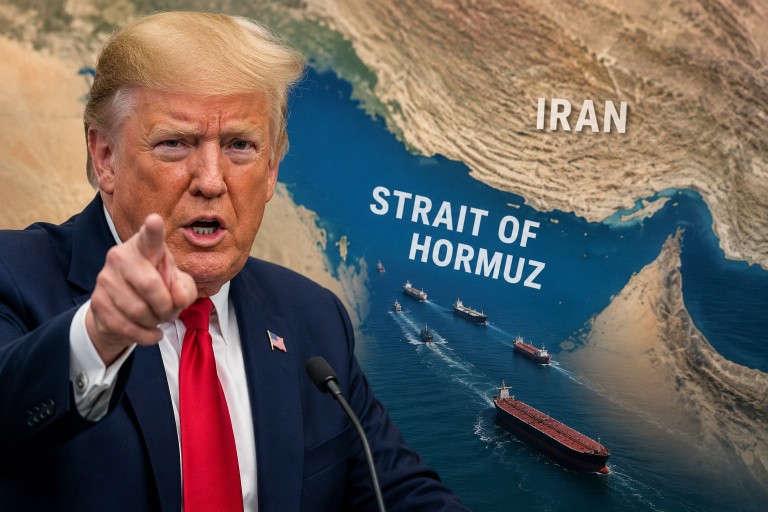
President Donald Trump has indicated plans to declare the Strait of Hormuz as part of the United States, amid ongoing tensions with Iran. During remarks in New York on Friday, Trump suggested that the declaration could happen “pretty soon” following a US victory over Iran. He also asserted that the US already exerts control over this crucial maritime passage through a blockade.
The Strait of Hormuz is a vital shipping route, with about 20% of the world’s seaborne oil supply typically traversing this waterway. Situated between Iran and Oman, the strait has been largely inaccessible since US and Israeli military actions against Iran commenced. It remains uncertain if Trump’s statements signify an actual shift in US policy or if they were made as a political maneuver.
Iran has dismissed Trump’s threat, with Deputy Foreign Minister Kazem Gharibabadi stating that Tehran will not succumb to US pressure. He emphasized that decisions regarding the opening or closing of the strait fall within Iran’s jurisdiction. Iranian Foreign Minister Abbas Araqchi added that Tehran has not chosen to enter into negotiations with Washington, noting that messages relayed through Qatar and Pakistan do not amount to formal dialogue.
Iran has set forth several conditions for the resumption of shipping through the strait, including reparations for war-related damages, the removal of sanctions, and the release of frozen Iranian funds. The ongoing conflict and shipping disruptions have driven fuel prices upward, intensifying consumer strain. Trump defended the price hikes, arguing that Americans are paying more to prevent Iran from pursuing nuclear weapon capabilities.
The stalemate over the Strait of Hormuz has sparked concerns regarding global energy supply stability and the broader economic repercussions of the dispute. As tensions persist, the international community watches closely, aware of the potential impacts on the global economy and energy markets.