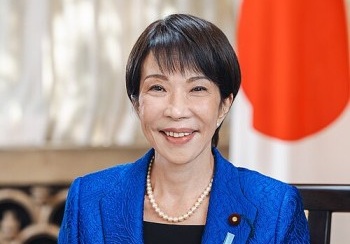
Prime Minister Sanae Takaichi is committed to minimizing the issuance of deficit-covering government bonds in response to economic challenges stemming from the Middle East conflict. During discussions in the Diet on May 20, she emphasized the importance of safeguarding economic activities and citizens’ livelihoods without resorting to extensive government borrowing. While the specifics of a supplementary budget for fiscal 2026 remain undetermined, Takaichi mentioned that surplus funds from fiscal account settlements will soon become available to address the situation.
Despite her previous stance against the necessity of an extra budget, Takaichi recently instructed Finance Minister Satsuki Katayama to consider preparing one. This shift came to light during a government-ruling coalition meeting on May 18. Opposition leader Junya Ogawa criticized the timing of these measures, suggesting they were overdue. However, Takaichi defended her actions, asserting that her directives were timely and consistent, despite earlier remarks that a supplementary budget was unwarranted.
In a debate with Yuichiro Tamaki of the Democratic Party for the People, Takaichi acknowledged considering a supplementary budget before the Golden Week holidays. This contradicts her earlier statement on May 11, where she dismissed the immediate need for such a budget. Ogawa found this inconsistency problematic, questioning the sincerity of her earlier remarks. Meanwhile, Tamaki proposed extending gasoline subsidies to mitigate high crude oil prices, a suggestion Takaichi is open to, emphasizing a strategic approach to subsidy adjustments.
The economic impact of the Middle East conflict is also affecting industries reliant on naphtha, a key ingredient in petrochemical production. Companies like snack manufacturer Calbee Inc. are adapting by changing packaging due to unstable ink supplies derived from naphtha. While the Takaichi administration assures that naphtha supplies are sufficient, supply chain bottlenecks are causing distribution issues. To address this, Takaichi has tasked Industry Minister Ryosei Akazawa with resolving the supply chain constraints.
Additionally, Takaichi reiterated her commitment to eliminating the consumption tax on food items. She plans to submit relevant legislation to the Diet, contingent on the national council on social security providing an interim report before the upcoming summer session. Through these measures, Takaichi aims to navigate the economic turbulence while maintaining fiscal responsibility.