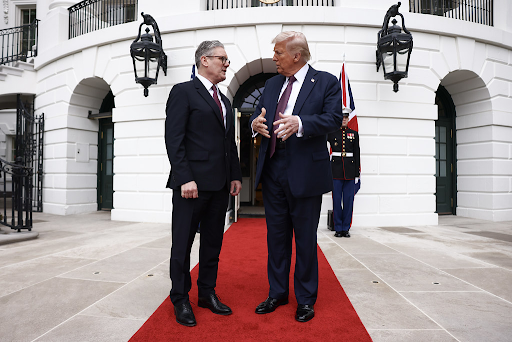
President Donald Trump and Prime Minister Keir Starmer put on a public display of disagreement over Palestine policy on Thursday, effectively agreeing to disagree on one of the most contentious issues in foreign policy. Trump’s explicit opposition to the UK’s recognition plan, voiced in London, has put the “special relationship” in a new and complex light.
The U.S. President forcefully reaffirmed his country’s long-held position: a negotiated settlement must precede statehood. This “negotiation-first” doctrine is a central tenet of U.S. Middle East policy, and it was the reason for the administration’s recent vote against a widely-backed UN resolution on the two-state solution.
Prime Minister Starmer, while acknowledging the U.S. stance, defended the UK’s new direction with equal conviction. He framed the proposed unilateral recognition of Palestine as a “catalyst,” a strategic intervention designed to breathe new life into a moribund peace process. It represents a fundamental shift in British thinking on the conflict.
The core of their disagreement is tactical. The U.S. believes the most valuable tool for peace is the promise of statehood, and that it should be withheld until a deal is done. The UK now believes that the diplomatic reality of statehood can be a tool to help forge that deal.
While the immediate diplomatic fallout was managed by Starmer’s decision to delay the policy, the public airing of such a fundamental disagreement is significant. It signals a new phase in the US-UK alliance, one characterized by a greater willingness on the part of the UK to chart its own course, even if it leads to open and public discord with its closest ally.