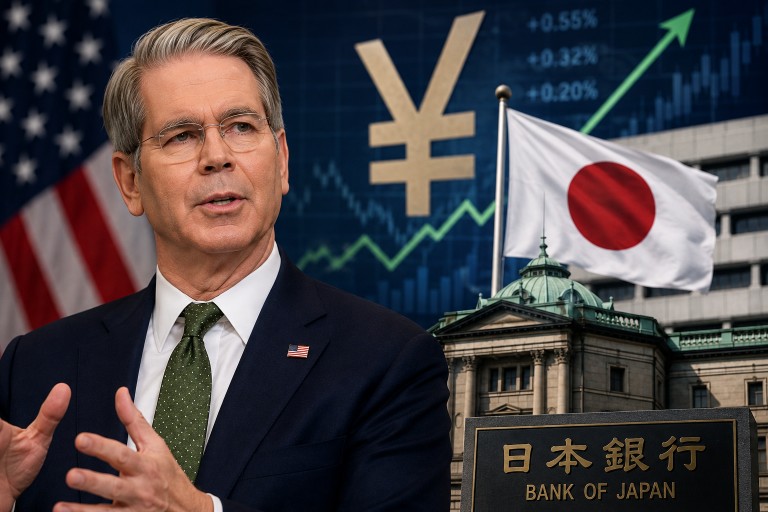
U.S. Treasury Secretary Scott Bessent has voiced strong backing for Japan’s initiatives to bolster the yen, a move that aligns with market speculations about a potential interest rate hike by the Bank of Japan (BOJ) at its upcoming policy meeting on September 17-18. Bessent, during a meeting with BOJ Governor Kazuo Ueda at the G20 finance ministers and central bank governors’ summit in Asheville, North Carolina, emphasized that the yen’s weakness is contributing to inflationary pressures. He underscored the necessity for sound monetary policies and effective communication to stabilize inflation expectations and curtail excessive currency fluctuations.
The financial markets are increasingly anticipating another interest rate increase by the BOJ, building on the central bank’s previous rate hike in June. An interest rate rise in September could amplify the expectations that the BOJ is heading towards a more rapid monetary tightening phase. This anticipation is already impacting Japan’s borrowing landscape, with the benchmark 10-year government bond yield exceeding 3% for the first time since 1996, signaling expectations for tighter monetary policies and raising concerns over Japan’s fiscal health.
The rising yields are not without consequences, as they are contributing to an increased debt-servicing burden for the Japanese government. According to the Finance Ministry’s projections, interest payments could potentially escalate significantly if borrowing costs persist at elevated levels. This scenario poses a fiscal challenge, which the government must navigate carefully to maintain economic stability.
On the domestic front, Japanese households are encountering higher mortgage costs, especially for fixed-rate loans, due to these rising interest rates. However, there is a silver lining as savers and financial institutions are seeing improved returns on deposits and long-term investments, thanks to the higher rates. This dual impact on different economic actors highlights the complex trade-offs involved in monetary policy decisions.
The BOJ is thus tasked with the delicate balancing act of supporting the yen and controlling inflation while avoiding undue stress on households, businesses, and government finances. This intricate equilibrium is crucial to Japan’s economic strategy, as it seeks to manage inflation without imposing excessive financial strain on its economy.