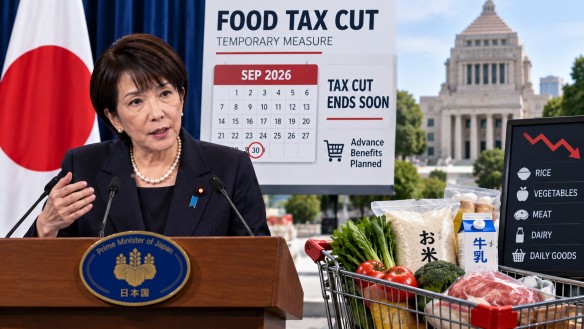
Japan is set to implement a temporary reduction in the consumption tax on food, followed by advance cash benefits for low- and middle-income households when the reduced tax rate concludes. Beginning in April 2027, the government plans to lower the tax on food from 8% to 1% for a period of two years. This measure is designed to alleviate financial burdens before the tax reverts to its original rate of 8% in April 2029. To cushion the impact of this change, eligible households will receive half of their annual benefits ahead of time.
The income-based benefit scheme will commence in April 2027, with the amount of payments varying depending on household income and the number of children. Estimates suggest that annual payments to qualifying households in fiscal years 2027 and 2028 will total approximately ¥600 billion, equivalent to $4 billion. The government’s goal is to finalize this policy by September, with plans to present the necessary legislation during a special parliamentary session anticipated in October.
To fund the tax reduction, the government intends to reassess existing subsidies, special tax measures, and government expenditures. This approach aims to avoid resorting to deficit-financing bonds, although the exact sources of funding have yet to be determined. The initiative is part of a broader strategy to support economic sectors impacted by these tax modifications.
Additionally, measures will be implemented to assist agriculture, forestry, fisheries, and restaurant businesses that could be affected by the tax changes. Retailers, on the other hand, will be offered extended timeframes to comply with tax-inclusive price display mandates, ensuring a smoother transition for all stakeholders involved.