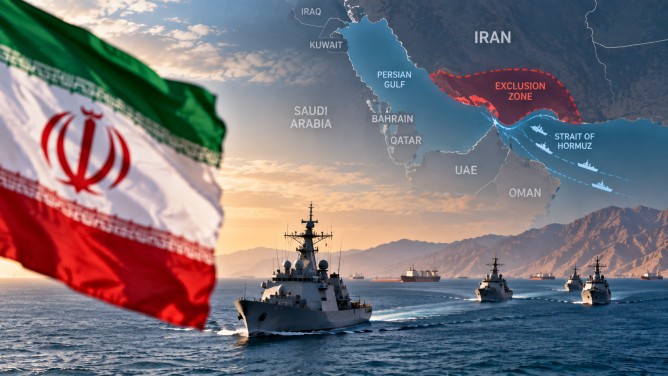
Iran has announced plans for a new “exclusion zone” near the strategically crucial Strait of Hormuz, a move aimed at vessels it suspects of attempting to navigate through this vital maritime passage. Mohsen Rezaei, the newly appointed head of Iran’s Supreme National Security Council, detailed that this zone would stretch from the U.S. naval blockade area toward the Strait of Hormuz and further into the Arabian Gulf. Vessels identified within this zone with intentions of crossing the strait could face inclusion on an Iranian sanctions list.
This announcement comes in the wake of heightened tensions following a U.S. military strike on three Iranian oil tankers. The U.S. action was in response to Iran’s ballistic missile attacks targeting American warships. Additionally, Iran has claimed to have hit an unmanned U.S. vessel attempting to enter the strait, an assertion that the U.S. military has denied. The Strait of Hormuz remains a vital conduit for global oil and gas supplies, and any disruptions have prompted concerns about potential impacts on energy prices and the global economy.
In response to these developments, the United States has deployed naval forces to maintain a blockade of Iranian ports, aiming to curb Tehran’s oil exports. This military maneuver is part of a broader strategy to apply economic pressure on Iran, especially after recent negotiations between the two nations broke down. Despite these strained relations, Rezaei emphasized Iran’s commitment to pursuing diplomatic solutions, albeit with a demand for more robust assurances in any forthcoming agreements.
Meanwhile, talks between Washington and Tehran remain at an impasse, with each side accusing the other of breaches. Despite the lingering tensions, U.S. officials have assured that substantial volumes of oil continue to transit through the Strait of Hormuz, facilitated by naval protection and alternative regional pipelines. This ongoing flow is critical to mitigating economic fallout and ensuring stability in energy supplies globally.