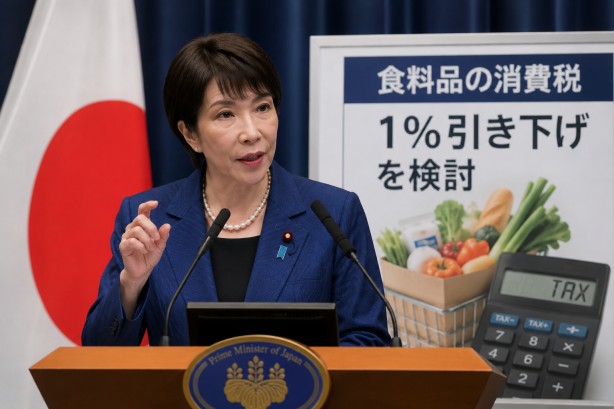
Japanese Prime Minister Sanae Takaichi is set to direct the ruling Liberal Democratic Party to advance a proposal that seeks to slash the consumption tax on food items significantly. This reduction would bring the tax down from 8% to just 1% for a limited period of two years, beginning in April 2027. The initiative comes in the wake of stalled negotiations among various political parties regarding tax reform.
The government, along with its ruling coalition, is pushing for this temporary tax cut as part of a broader strategy to alleviate the financial strain on citizens, particularly those in low- and middle-income brackets. In addition to the tax reduction, the plan includes cash assistance designed to provide further relief. Approximately ¥600 billion is earmarked for financial support, aiming to address the rising cost of living.
This move is part of a larger effort to finalize a comprehensive policy by early August. The government plans to introduce the necessary legislation during an extraordinary parliamentary session later this year. Such measures are intended to ensure that the tax cut and associated financial assistance are implemented by the following April.
The proposed tax cut and financial support package reflect the administration’s commitment to easing economic pressures faced by households. By targeting essential food items, the government aims to make a direct impact on everyday expenses, offering tangible relief to those struggling with increased living costs.