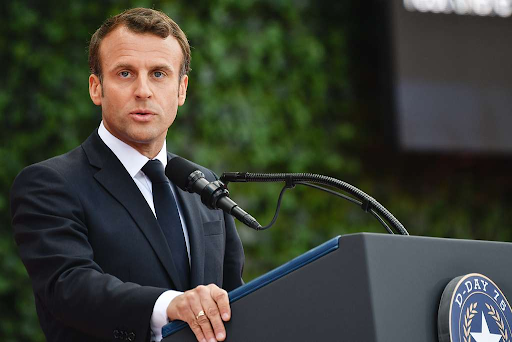
There are moments in political history when a leader looks at an injustice and simply refuses to accept it. Emmanuel Macron’s intervention at the AI Impact Summit in Delhi had that quality. Confronted with evidence that 1.2 million children had been victimised by AI-generated deepfakes in a single year — one in every 25 children in the worst-affected countries — the French president refused to treat this as an unfortunate externality of technological progress. He named it as a failure of governance and demanded that democratic governments respond.
His refusal was expressed through both argument and policy. The argument: what is illegal in the physical world must be illegal online. The policy: domestic legislation in France to ban social media for under-15s, and international coordination through the G7 presidency to push for enforceable standards that make platforms and AI developers legally accountable for child safety outcomes. Neither the argument nor the policy is revolutionary. What is notable is the combination of moral urgency and policy specificity with which Macron has pursued both.
He also refused to accept the framing of European AI regulation as anti-innovation. The Trump administration’s AI adviser had renewed this critique at the same summit, describing the EU’s AI Act as hostile to entrepreneurs. Macron’s response was patient but firm: the critics are misinformed, Europe innovates while it regulates, and safe environments for technological development are more durable than unregulated ones. He did not concede the premise that safety and growth are in tension, because the evidence does not support that premise.
António Guterres, present at the same summit, gave Macron significant moral and institutional support. His warning that no child should be a test subject for unregulated AI aligned precisely with the French president’s argument. Narendra Modi’s call for child-safe, family-guided AI development added another voice to what is becoming a genuine international chorus. Sam Altman’s endorsement of international oversight suggested that even the most commercially powerful AI companies are beginning to feel the pressure.
The injustice Macron refused to accept in Delhi is not a technical problem awaiting an engineering solution. It is a political problem — a failure of democratic governments to extend their authority into a space where children are being harmed. His refusal to accept that failure is the beginning of a remedy. Whether that remedy proves sufficient depends on what happens next. But in Delhi, the refusal itself was important — a signal that the harm being done to children will not simply be filed away as the cost of progress.