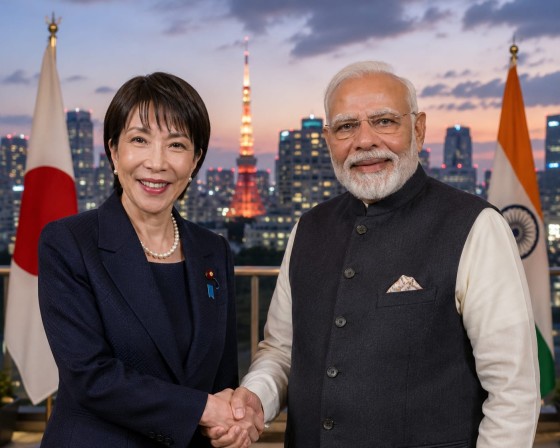
In a move to bolster strategic ties, Japanese Prime Minister Sanae Takaichi and Indian Prime Minister Narendra Modi have agreed to enhance their countries’ cooperation in security, economic resilience, and advanced technology sectors. The resolution came following their summit in New Delhi, where both leaders underscored their commitment to maintaining a free and rules-based Indo-Pacific. They also voiced concerns over economic coercion and tensions in the East and South China Seas.
The summit concluded with both nations pledging to fortify supply chains, particularly in vital areas like semiconductors and critical minerals. This initiative aims to mitigate vulnerabilities and ensure stability in these strategic sectors. Additionally, Japan and India plan to expand their military collaboration through more joint exercises and increased cooperation in naval vessel maintenance and defense equipment development. A significant development is the planned “two-plus-two” meeting of foreign and defense ministers later this year to further solidify defense ties.
Economically, the partnership made significant strides with Japanese and Indian companies signing 129 memorandums of understanding. These agreements represent investments worth approximately ¥2 trillion ($12.4 billion) and span sectors such as semiconductors, artificial intelligence, automotive manufacturing, and other advanced technologies. This wave of investment is expected to drive significant growth and innovation in both countries.
Furthermore, the two countries have set an ambitious target to enhance their collaboration in artificial intelligence. By 2030, they aim to bring 500 Indian AI specialists to Japan to support joint research and innovation projects. This initiative reflects the growing importance of emerging technologies and the mutual desire to be at the forefront of AI advancements.