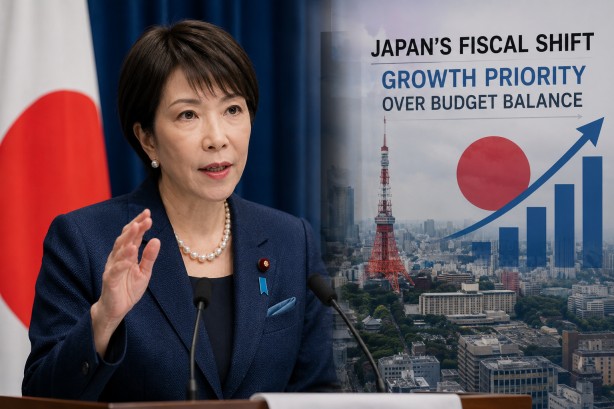
In a notable policy shift, Japan’s government has unveiled a new economic strategy under Prime Minister Sanae Takaichi, emphasizing economic growth and sustainable fiscal management over the traditional goal of achieving a single-year primary budget surplus. This new direction is set to gradually reduce the nation’s public debt-to-GDP ratio, a move that represents a departure from the country’s long-standing focus on fiscal consolidation.
Central to the government’s plan is an ambitious investment target, aiming to generate more than ¥370 trillion in both public and private funds by 2040. These investments will be channeled into key sectors such as artificial intelligence, which are expected to play a pivotal role in driving Japan’s economic expansion. This strategic approach underscores the administration’s commitment to fostering innovation and long-term growth.
Additionally, the policy outlines temporary reductions in food consumption taxes and an increase in defense spending, raising questions about the financing of these initiatives. Economists have expressed concerns regarding the reliance on sustained economic growth and favorable interest rates, both of which are uncertain factors that could impact the success of the government’s financial strategy.
As Japan embarks on this economic overhaul, financial markets are anticipated to scrutinize upcoming budgetary decisions closely. The key focus will be on assessing whether the government’s expansive spending plans can be aligned with the objective of maintaining long-term fiscal stability. The unfolding of these policies will be crucial in determining Japan’s economic trajectory in the coming years.