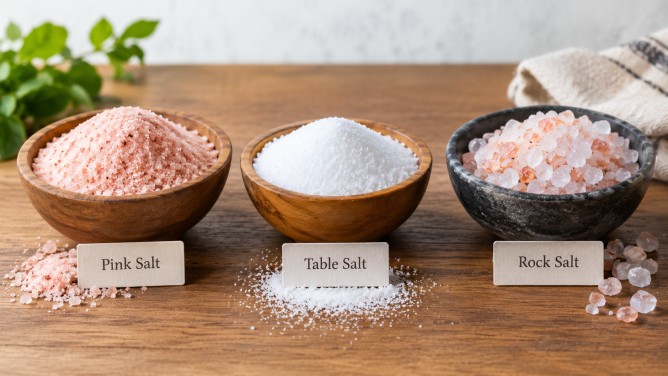
When selecting salt for your diet, understanding the iodine content is crucial for supporting thyroid health. Iodine is an essential mineral that aids the thyroid gland in producing hormones responsible for regulating metabolism and supporting growth. With various salts available, such as iodised table salt, pink Himalayan salt, and rock salt, knowing their differences can help in making informed dietary choices.
Iodised table salt is a reliable source of iodine, as it is specifically processed to include this vital mineral. This makes it a practical choice for everyday cooking to meet nutritional requirements. However, it’s important to verify that the salt packaging is clearly labelled as iodised, as not all table salts contain added iodine. Proper storage in a dry, covered container is recommended to maintain its quality and iodine content.
Pink Himalayan salt is often regarded as a natural alternative due to its distinctive color, which comes from trace minerals. Despite its popularity, it is not a dependable source of iodine unless it is fortified and labelled as iodised. The trace minerals present in pink salt are generally too minimal to make a significant impact on iodine intake or overall dietary health. Therefore, if you prefer pink salt, ensure that your diet includes other iodine sources.
Similarly, rock salt, commonly used in traditional Indian cooking, does not inherently provide sufficient iodine. Its mineral content varies based on its source and it may not be iodised. Using non-iodised rock salt exclusively could lead to insufficient iodine intake unless complemented with other iodine-rich foods.
The recommended daily iodine intake for most adults is approximately 150 micrograms, with increased needs during pregnancy and breastfeeding. Besides iodised salt, iodine can be obtained from foods like dairy products, eggs, seafood, and certain fortified foods. Individuals following vegetarian or vegan diets should be particularly mindful of their iodine sources and may benefit from consulting a healthcare professional or dietitian to ensure adequate intake.
Ultimately, when choosing salt, look for the iodised label if it is intended as a source of iodine. Use all types of salt sparingly, as excessive sodium consumption can lead to health issues such as high blood pressure. Maintaining a varied and balanced diet is essential for supporting thyroid health and overall wellbeing.