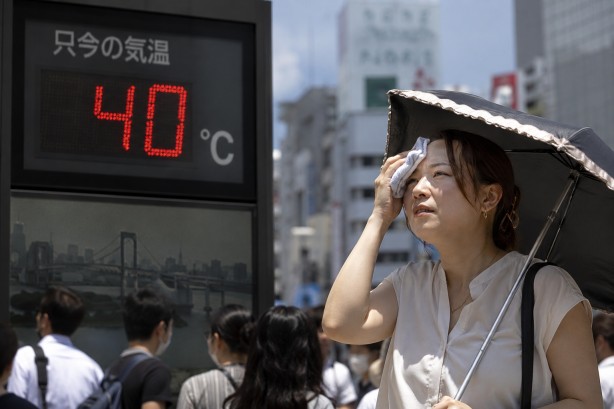
On July 21, Japan faced an intense heatwave as temperatures soared past 40°C in multiple regions, driven by a strong high-pressure system. This marks the ninth consecutive year that such scorching temperatures have been documented in the country, underscoring a persistent pattern of extreme heat events.
This year, Japan introduced a new term, “kokushobi,” or “cruelly hot days,” to describe when temperatures exceed 40°C, and this was the first time the term was officially applied. The city of Tajimi in Gifu Prefecture recorded the highest temperature of the day at 40.3°C, closely followed by Gujo at 40°C. In Aichi Prefecture, the city of Toyota also experienced oppressive heat, reaching 40.1°C.
By the middle of the afternoon, a substantial portion of the nation was affected, with 255 out of 914 weather observation stations reporting temperatures of at least 35°C. This widespread heatwave impacted both eastern and western parts of Japan, illustrating the severity of the weather conditions being experienced.
In response to the sweltering temperatures, authorities issued heatstroke alerts for 42 prefectures, the highest number of such warnings this year. Residents were advised to take preventive measures against heat-related illnesses, including using air conditioning, staying hydrated, and maintaining salt intake to mitigate the risk of heatstroke.