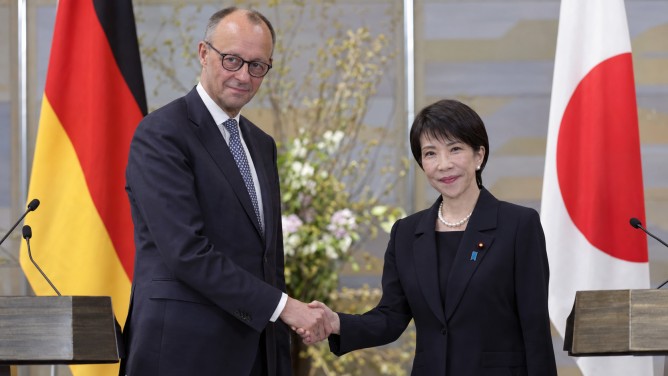
Japan has expressed concerns regarding Germany’s potential involvement in the Global Combat Air Programme (GCAP), a collaborative fighter jet project with Britain and Italy, fearing it could lead to delays in developing the next-generation combat aircraft. The apprehension arises after German Chancellor Friedrich Merz showed interest in collaborating on the project during discussions with Japanese Prime Minister Sanae Takaichi in Tokyo on October 28.
The GCAP aims to produce an advanced fighter jet ready for deployment by 2035. However, a Japanese Defence Ministry source highlighted that Germany’s participation might necessitate renegotiating the division of responsibilities among the existing partners—Japan, Britain, and Italy—potentially disrupting the project’s timeline.
While Britain is reportedly open to Germany joining the initiative to help share development costs and lower the aircraft’s unit price by expanding potential orders, Japan intends to consult with its British and Italian counterparts to assess the extent of Germany’s potential cooperation. One proposed solution is for Germany to participate as an observer, allowing it to access information and consider purchasing the aircraft without directly impacting the development schedule.
Germany’s interest in the project aligns with its broader defense strategy, seeking to enhance its military capabilities through international collaborations. During the Tokyo talks, Chancellor Merz emphasized the importance of exploring cooperative opportunities in fighter aircraft development between the two nations.
As discussions continue, Japan remains cautious about any changes that might disrupt the established agreements with its current partners, prioritizing the timely completion of the GCAP project. The outcome of these deliberations could significantly impact the project’s progression and the future of international defense collaborations.