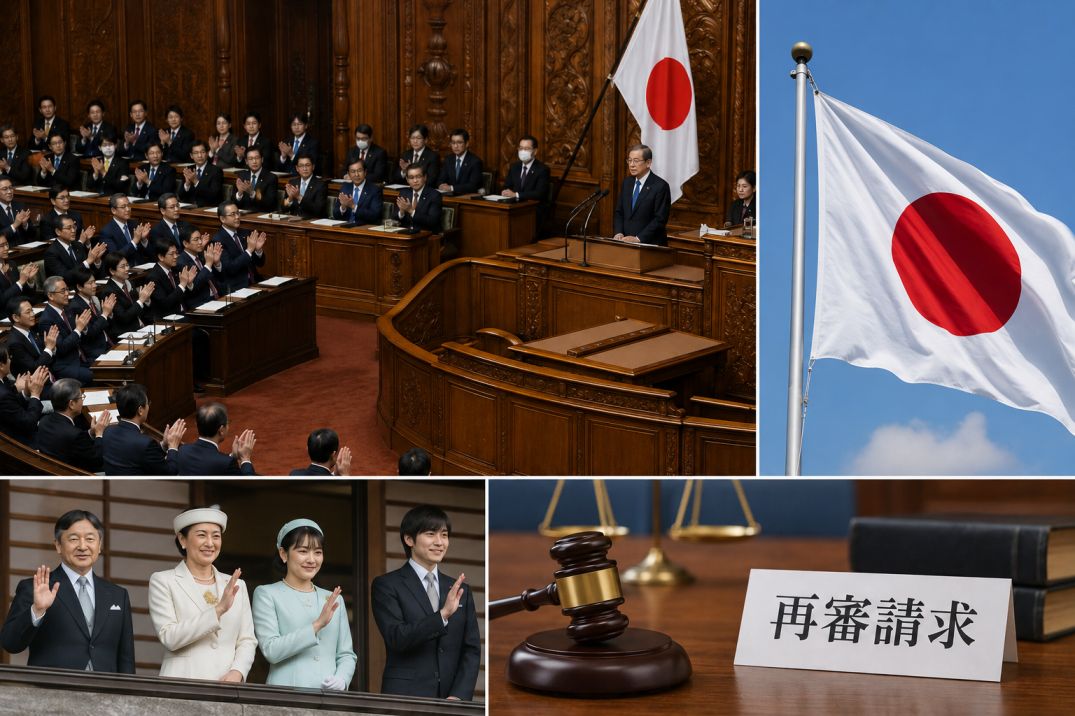
Japan’s parliament has enacted three significant legislative measures, marking a notable shift in national policy. Among these, the first major amendment to the Imperial House Law since 1947 stands out, alongside a new law criminalizing the public desecration of the national flag and reforms targeting the criminal retrial process. These changes reflect both a modernization effort and a reinforcement of national values.
The amendment to the Imperial House Law introduces provisions allowing female members of the imperial family to maintain their royal status after marriage. Additionally, it permits the adoption of male descendants from former imperial branch families, a move designed to bolster the imperial succession system. This change is seen as a progressive step towards ensuring the continuity and stability of the monarchy.
Another key piece of legislation approved is the criminalization of public desecration of Japan’s national flag. Offenders now face the possibility of up to two years in prison or a fine of 200,000 yen. Proponents argue that this law is crucial for safeguarding national symbols, while opponents express concerns over its potential impact on freedom of expression.
Furthermore, the parliament has passed reforms aimed at expediting the criminal retrial process. These reforms are intended to address delays in reviewing cases of wrongful conviction. Despite these changes, several opposition parties have voiced their dissatisfaction, claiming that the measures fall short in terms of ensuring transparency and the comprehensive disclosure of evidence.